

Key Takeaways
AAFCO Nutritional Adequacy Statement
AAFCO stands for the Association of American Feed Control Officials - a private organization that establishes the nutritional standards used by U.S. pet food manufacturers. When a pet food label carries an AAFCO statement, it means the product either meets AAFCO's published nutrient profiles or has undergone feeding trials using AAFCO protocols. This statement is the closest thing to a nutritional quality checkpoint that exists on commercial pet food packaging.
AAFCO itself does not test, approve, or certify individual pet food products. Compliance with AAFCO standards is self-declared by manufacturers and enforced at the state level through feed control officials.
What AAFCO Is - and What It Isn't
The Association of American Feed Control Officials (AAFCO) is a private, nonprofit organization made up of state and federal regulatory officials. Its core function is to develop model regulations and nutrient standards that U.S. states can adopt as law for animal feed, including pet food. Most states follow AAFCO's guidelines, which is why you see the organization's name on packaging nationwide.
Here's the critical distinction: AAFCO does not test products, issue approvals, or run a certification program. When a manufacturer prints an AAFCO statement on a bag, they are self-declaring that their product complies with AAFCO standards. State feed control officials are responsible for actual enforcement, which varies by state. For a fuller picture of what pet food labels communicate - and where they fall short - see what pet food labels actually tell you.
Decoding the Nutritional Adequacy Statement
The AAFCO nutritional adequacy statement typically appears in small text on the back or side of a pet food package. It tells you two things: how the food was validated and for whom it is intended.
The Two Validation Methods
- Formulated to meet nutrient profiles: The manufacturer ran a chemical analysis of the food and confirmed it hits AAFCO's published minimum (and sometimes maximum) nutrient levels. This is the more common - and less rigorous - method. It verifies numbers on paper but does not confirm that nutrients are actually absorbed by a living animal.
- Substantiated by feeding trials: Real animals ate the food according to AAFCO's feeding trial protocols for a defined period, and the animals passed established health benchmarks. This approach provides more direct evidence that the food supports health, though AAFCO's feeding trial protocols have limitations in scope and duration.
Both statements look similar on the label. If it matters to you, look specifically for the phrase "animal feeding tests" - that signals a feeding trial was conducted.
A Note on Raw and Home-Prepared Diets
Raw and home-prepared diets typically do not carry AAFCO statements, because they are not pre-packaged commercial products subject to the same labeling rules. This does not automatically make them inadequate - but it does mean the nutritional accountability structure is different. If you are exploring these options, raw diets for pets - what the evidence actually shows offers a balanced look at the documented benefits and risks.
Life Stage Designations
The statement also specifies a life stage: adult maintenance, growth and reproduction, or all life stages. A food labeled for adult maintenance alone has not been validated for puppies, kittens, or pregnant animals. 'All life stages' must clear the higher bar set for growth and reproduction - a bar that includes more demanding requirements for protein, calcium, and other nutrients.
What 'Complete and Balanced' Does and Doesn't Guarantee
'Complete and balanced' is a legally defined phrase in the context of U.S. pet food regulation - a food can only use it if it carries a valid AAFCO nutritional adequacy statement. What it guarantees is that the food meets minimum nutrient thresholds established by AAFCO's nutrient profiles for dogs or cats.
What it does not guarantee:
- That ingredients are high quality or responsibly sourced
- That nutrients are highly bioavailable (easily absorbed and used by the body)
- That the food is optimal for your specific pet's health conditions or needs
- That every batch maintains consistent nutrient levels
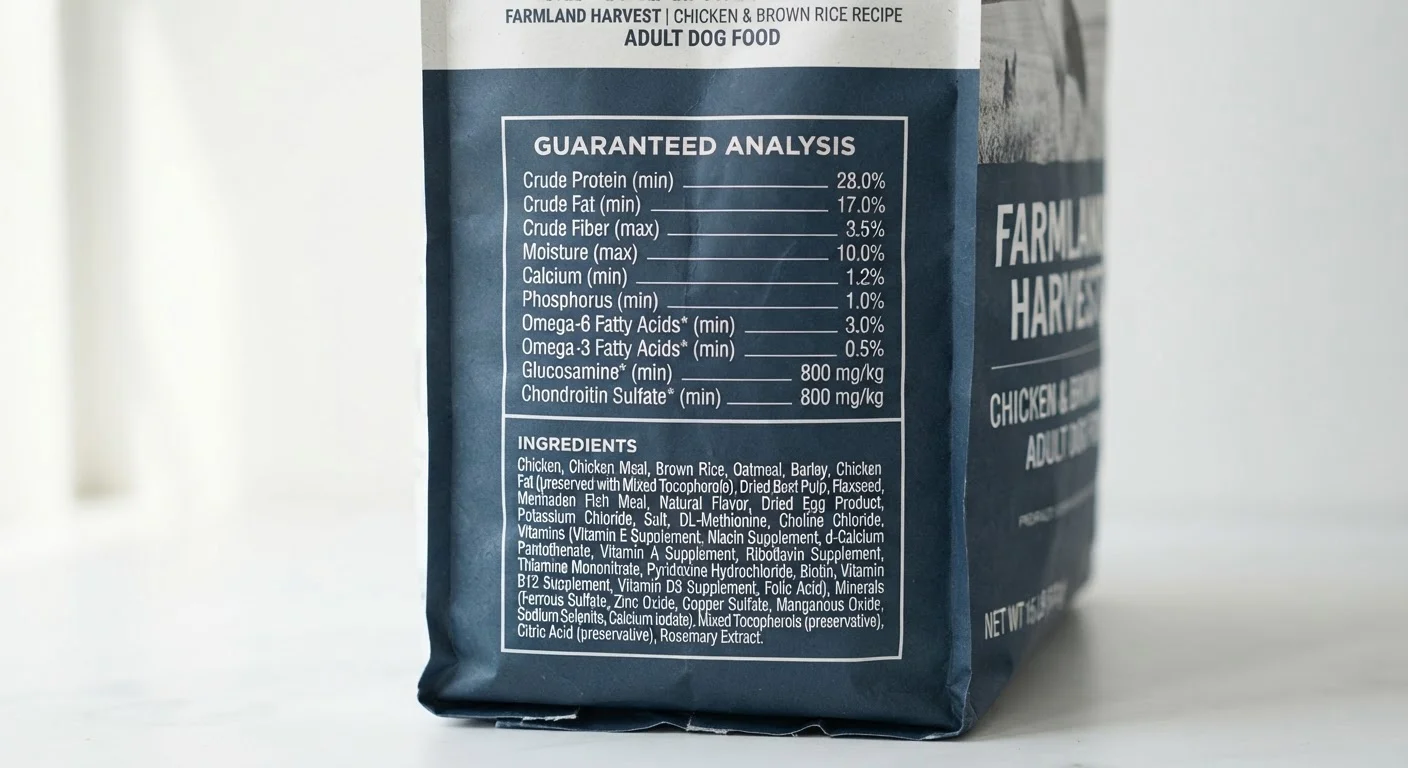
Think of the AAFCO statement as a floor - a minimum standard a food must clear to make the claim. It is a meaningful floor, but there is significant room above it. For a practical walkthrough of the full label, reading a pet food label without getting lost in the fine print explains each section step by step.
The Red Flag: 'Supplemental or Intermittent Feeding Only'
If a pet food label reads "for supplemental or intermittent feeding only" - or carries no AAFCO statement at all - it is not formulated to meet a pet's complete nutritional needs. These foods are intended to complement a balanced diet, not replace it.
Common examples include topper products, some freeze-dried options, broth-style foods, and certain treats. Feeding these as a pet's sole diet over time risks nutritional deficiencies. If you are considering a diet that mixes commercial and home-prepared foods, the trade-offs are worth understanding carefully - homemade vs. commercial pet food covers the key considerations honestly.
This article provides general educational information about pet food labeling and is not a substitute for veterinary nutritional guidance. If you have concerns about your pet's diet, consult a licensed veterinarian or board-certified veterinary nutritionist.