

Key Takeaways
Pet Food Label
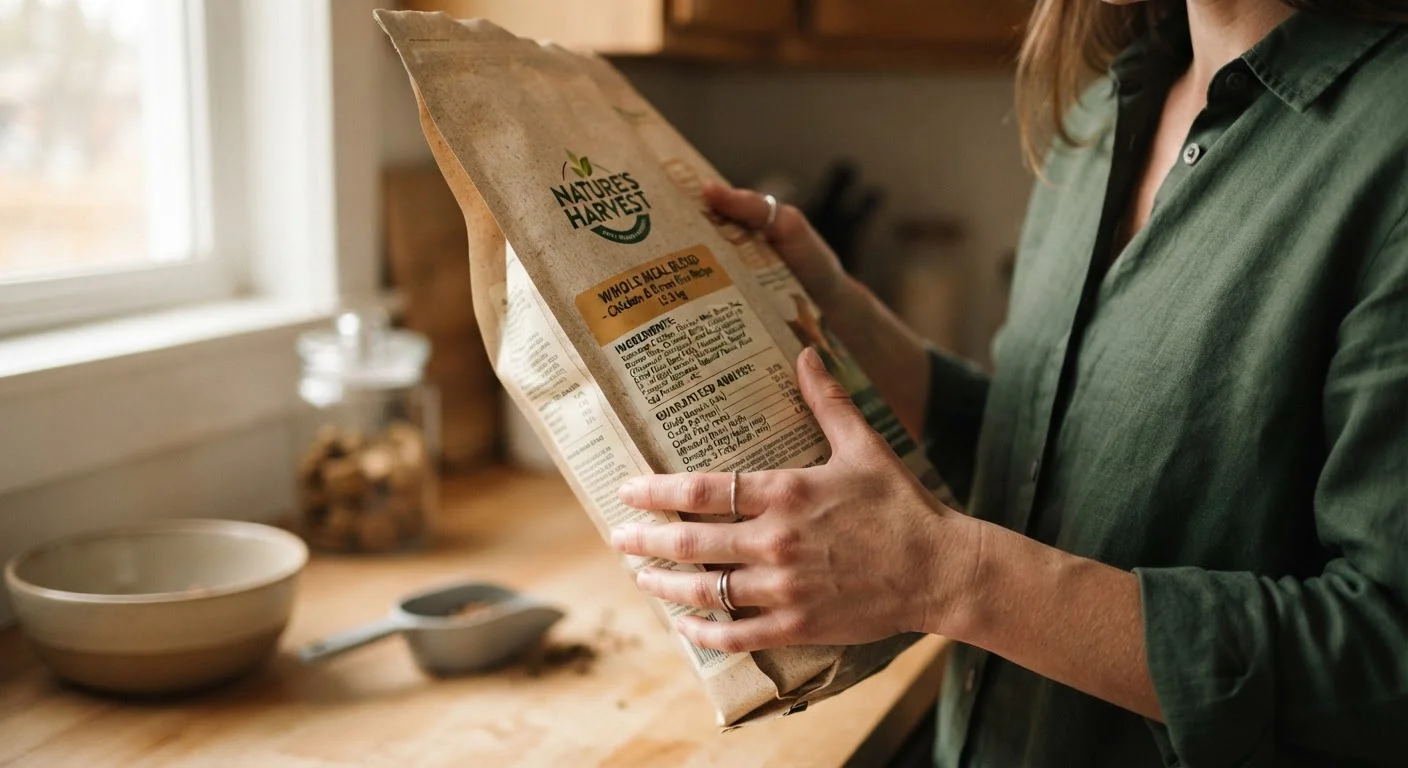
A pet food label is the regulated set of information printed on pet food packaging, including the ingredient list, guaranteed analysis, feeding directions, and nutritional adequacy statement. In the United States, label content is governed by the FDA and guided by standards set by the Association of American Feed Control Officials (AAFCO). Reading a label correctly helps you evaluate whether a food is nutritionally appropriate for your specific pet.
AAFCO publishes nutrient profiles for dogs and cats that manufacturers use as benchmarks; however, AAFCO itself does not test or certify individual products - that responsibility lies with the manufacturer.
The AAFCO Statement: The Most Important Line on the Label
Most pet owners scan ingredient lists first, but the single most informative line on any pet food package is the AAFCO nutritional adequacy statement. This small block of text tells you whether a food is formulated to be nutritionally complete - and for which life stage.
A statement reading "formulated to meet the nutritional levels established by AAFCO nutrient profiles for adult maintenance" means the manufacturer has calculated (or tested) that the food hits minimum nutrient targets for adult dogs or cats. If the statement instead says "for intermittent or supplemental feeding only," the food is not nutritionally complete and should not serve as a primary diet.
There are two ways a product can earn a "complete and balanced" claim: by meeting AAFCO's published nutrient profiles through formulation calculation, or by passing a feeding trial using AAFCO protocols. Feeding trials involve animals consuming the food over a set period and being monitored for health markers - a more rigorous standard. Look for language like "animal feeding tests" if this matters to you. For a deeper look at what this statement does and doesn't guarantee, see what AAFCO actually means on pet food packaging.
2
Ways a food can earn an AAFCO 'complete and balanced' claim
AAFCO recognizes formulation calculation against nutrient profiles and controlled animal feeding trials as the two accepted substantiation methods.
4
Required nutrients in every guaranteed analysis panel
U.S. regulations require pet food labels to list minimums for crude protein and fat, and maximums for crude fiber and moisture.
~78%
Typical moisture content in canned pet food
This high moisture level means nutrient percentages on wet food labels are not directly comparable to dry food labels without dry-matter basis conversion.
Ingredient Lists: What the Order Really Means
Ingredients are listed in descending order by pre-cooking weight. This means a protein like deboned chicken, which contains significant moisture, may rank first - but once processed, its contribution may be smaller than it appears. This is why you may see a meat listed first, followed by several grain or starch ingredients that collectively make up a larger portion of the finished product.
Watch for ingredient splitting: a practice where a single ingredient (like corn) is divided into multiple forms (corn flour, corn gluten meal, ground corn) so each appears lower on the list individually, even though corn as a whole may be the dominant ingredient by weight.
Named ingredients are generally more informative than vague ones. "Chicken meal" is more specific than "poultry meal," and "salmon" is more specific than "fish." More specific naming usually indicates a more consistent sourcing standard, though it does not by itself determine nutritional quality.
For a full walkthrough of label sections, reading a pet food label without getting lost in the fine print covers the complete picture in practical detail.
The Guaranteed Analysis and What It Leaves Out
The guaranteed analysis is a required panel that lists four values: minimum crude protein, minimum crude fat, maximum crude fiber, and maximum crude moisture. A few important caveats apply.
- "Minimum" and "maximum" are not exact figures. Actual content may be higher or lower than stated.
- Moisture content skews comparisons. Wet food often lists 78% moisture, making its protein percentage look low compared to dry food at 10% moisture. To compare foods fairly, you need to calculate on a dry-matter basis - essentially, stripping out the moisture to compare nutrient ratios directly.
- Quality is not measured here. Two foods can show identical protein percentages while differing significantly in protein digestibility and amino acid profiles.
If your pet has a specific health condition requiring precise nutritional management - such as kidney disease or food allergies - a guaranteed analysis alone won't give you what you need. Your veterinarian or a board-certified veterinary nutritionist can help you interpret these numbers in context. If you're noticing physical signs that may suggest a dietary gap, signs your pet's diet may not be meeting their nutritional needs is a practical next read.
How to Compare Wet and Dry Food Fairly
To compare nutrient content across different food formats, use the dry-matter basis calculation: divide the nutrient percentage by (100 minus the moisture percentage), then multiply by 100. For example, a wet food with 8% protein and 78% moisture has a dry-matter protein of about 36% - far higher than the label suggests. This simple math levels the playing field between wet and dry foods.
Marketing Language: What It Means and What It Doesn't
Pet food packaging is filled with terms that sound meaningful but carry little or no regulatory weight. Understanding the difference helps you cut through the noise.
- Natural
- No strict federal definition in pet food. Generally understood to exclude artificial additives, but not a guarantee of ingredient quality, sourcing standards, or nutritional completeness.
- Holistic
- Has no regulatory definition in pet food whatsoever. It is a pure marketing term.
- Human-grade
- Legally meaningful only if every ingredient and the manufacturing facility meet USDA standards for human food. Most products using this claim are not verified to that standard.
- Grain-free
- Describes the absence of grains but does not imply lower carbohydrate content overall - legumes, potatoes, and tapioca are common substitutes. The FDA has been investigating a potential link between grain-free diets and dilated cardiomyopathy (DCM) in dogs; consult your vet before choosing a grain-free food.
The most dependable signals remain the AAFCO statement, named ingredients, and the life stage designation. Everything else on the front of the package is designed to attract attention, not convey nutrition science. To understand how your choice of food format also affects your pet, see wet food, dry food, or both.
This article is for general informational purposes only and does not constitute veterinary or nutritional advice. Consult a licensed veterinarian for guidance specific to your pet's health and dietary needs.