

Travel & Trips

Packing for a US Road Trip: The Essentials You're Likely to Forget

Share
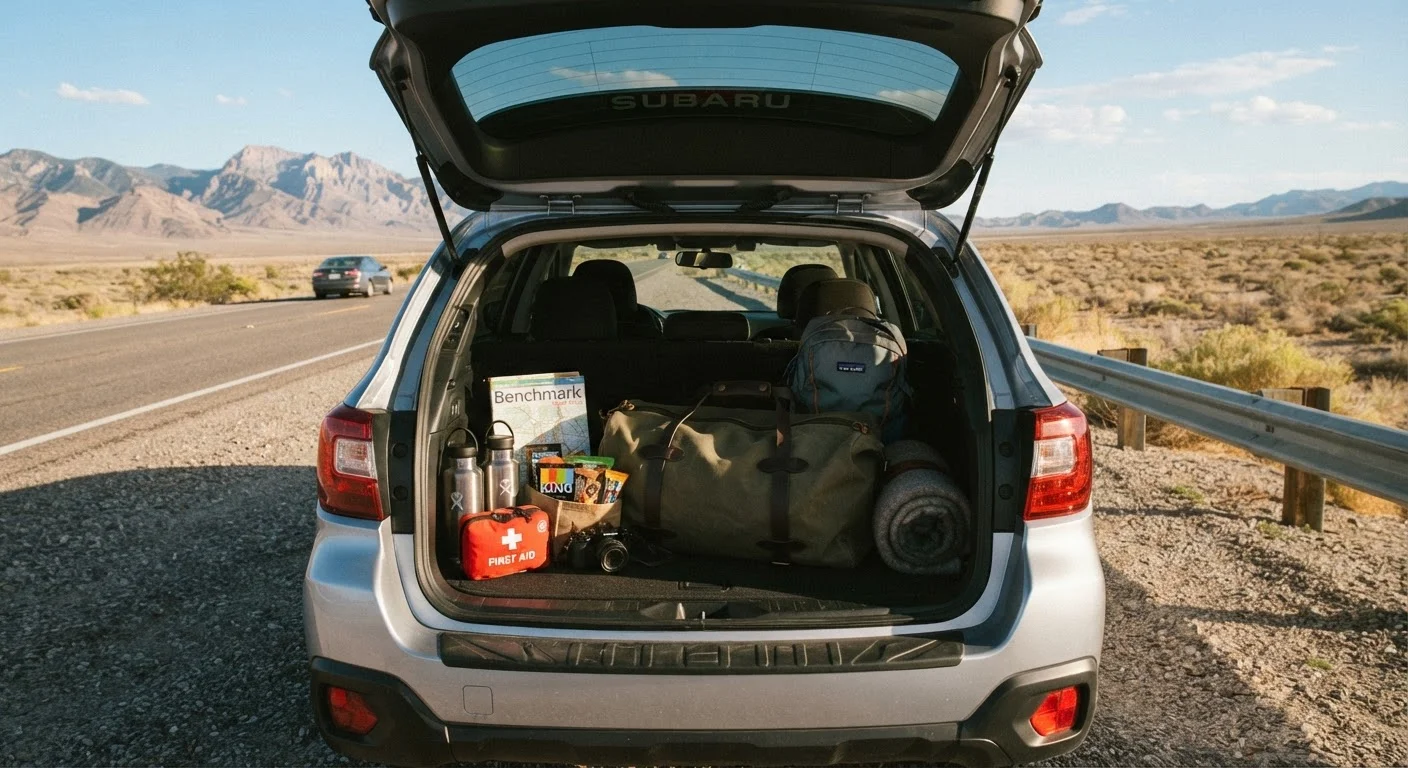
Open car trunk packed with road trip essentials including first aid kit, snacks, and water bottles on a sunny highway.

Key Takeaways

Most road trip mistakes happen before departure — forgotten documents and emergency gear top the list.
A physical emergency kit and paper backup maps are still worth carrying even with a smartphone.
Comfort and organization items dramatically reduce fatigue on multi-day drives.
Vehicle documents should be verified and accessible before every long trip.
Snacks and hydration planning prevent costly and time-wasting detours off route.
30–60 min

Summary

24 items · 30–60 minutes to gather and pack

Why Road Trippers Keep Forgetting the Same Things

Planning a US road trip is genuinely exciting — choosing routes, bookmarking stops, loading up the playlist. But somewhere between the big-picture dreaming and throwing bags in the car, a predictable set of essentials gets left behind. These aren't exotic items. They're the mundane-but-critical things: the insurance card, the car charger, the paper atlas that saves you when cell service drops somewhere in rural Nevada.

This checklist targets exactly those gaps. Whether you're heading down the Pacific Coast Highway or winding through the Appalachians — see our Blue Ridge Parkway driving guide for route-specific tips — the categories below cover what experienced road trippers have learned to pack only after they've been burned by not having it.

Run through this alongside our full pre-trip preparation checklist for the most complete coverage before you pull out of the driveway.

Required

Offline Map App (e.g., Maps.me or Google Maps offline mode)

Provides navigation in areas without cell service — essential for remote US stretches.

Optional

Portable Jump Starter

Lets you restart a dead battery without needing another vehicle nearby.

Optional

Physical Road Atlas

Serves as a reliable backup navigation tool when digital maps and cell coverage fail.

Required

Compact First Aid Kit

Covers minor injuries and medical needs until professional care is reachable.

Required

Multi-Port Car Charger

Keeps phones, GPS units, and other devices powered during long driving stretches.

Optional

Soft-Sided Cooler

Stores drinks and perishable snacks to reduce stops and keep passengers comfortable.

The Complete Road Trip Packing Checklist

Work through each group below a day or two before departure — not the morning you leave. That buffer gives you time to locate a misplaced document or make a quick hardware store run without derailing your start time.

Vehicle Documents

Place your current vehicle registration in the glove compartment and confirm it hasn't expired. Must
Locate your auto insurance card (physical copy) and verify the policy hasn't lapsed. Must
Pack your driver's license and check that it's valid for the states you'll be driving through. Must
Print or download a copy of any roadside assistance membership details and the provider's phone number. Should

Emergency & Safety Gear

Store a properly stocked first aid kit in an accessible spot — not buried under luggage in the trunk. Must
Pack a reflective safety triangle or road flares to use if you're stopped on a highway shoulder. Must
Verify that your spare tire is inflated and that the jack and lug wrench are present and functional. Must
Carry jumper cables or a compact jump starter battery pack in case of a dead battery. Should
Keep a small fire extinguisher rated for vehicle use somewhere accessible in the cabin. Nice to have

Navigation & Connectivity

Download offline maps for your entire route before leaving — cell coverage is patchy in many US regions. Must
Pack a physical road atlas or printed state maps as a true backup for dead-zone navigation. Should
Bring a car charger with enough ports for all devices you're relying on for navigation and communication. Must
Consider a portable battery bank for charging phones when you're away from the vehicle. Should

Comfort & Organization

Pack a small cooler stocked with water and snacks to reduce reliance on highway rest stops. Should
Bring a lumbar support pillow or seat cushion if you're driving more than four hours per day. Nice to have
Keep a dedicated bag or bin for in-cabin items so you're not digging through luggage while driving. Should
Pack sunshades for the windshield and side windows to protect parked vehicles and reduce glare. Nice to have

Health & Personal Essentials

Bring an adequate supply of any prescription medications — enough for the full trip plus a few extra days. Must
Pack motion sickness remedies if any passengers are prone to it, especially on mountain or winding routes. Should
Carry hand sanitizer, masks, and basic hygiene supplies for gas station and rest stop stops. Should
Include sunscreen and insect repellent, particularly if you plan any outdoor stops along the route. Should

Don't Rely Solely on Your Smartphone

Large portions of rural America — including stretches of iconic routes like Route 66, the Great Plains, and parts of the Southwest — have limited or no cellular coverage. If your entire navigation and emergency-contact plan depends on a connected phone, a dead zone could leave you genuinely stranded. Always have an offline map downloaded and a paper backup for at minimum the most remote segments of your route.

For a deeper dive into vehicle-specific preparation — tires, fluids, lights, and under-the-hood checks — pair this list with our driver's safety walkthrough before every long trip.

Building Better Road Trip Habits

The items most travelers forget aren't random — they follow a pattern. Documents get skipped because they feel like a given. Emergency gear gets skipped because it feels unlikely. Comfort items get skipped because they feel optional. But on a 10-hour driving day, a lumbar pillow or a properly stocked snack cooler isn't a luxury — it's what keeps you alert and on schedule.

Once you've got the packing dialed in, the next step is building a route you'll actually enjoy driving. Our road trip route planning guide walks through how to balance mileage, rest stops, and worthwhile detours. And if you're curious how domestic prep compares to going abroad, international packing strategies are a different exercise entirely.

The Trip Planning Tips hub is a good bookmark for ongoing trip-building advice well beyond packing lists.

Travel & Trips Editorial Team is the collective byline for our editorial team and contributor network. Articles published under this byline or an editorial pen name are researched, written, and reviewed according to our editorial standards for clarity, consistency, and independence before publication.

View all articles by Travel & Trips Editorial Team →
Disclaimer: The content provided on our blog site traverses numerous categories, offering readers valuable and practical information. Readers can use the editorial team’s research and data to gain more insights into their topics of interest. However, they are requested not to treat the articles as conclusive. The website team cannot be held responsible for differences in data or inaccuracies found across other platforms. Please also note that the site might also miss out on various schemes and offers available that the readers may find more beneficial than the ones we cover.