

Key Takeaways
Why the Title Transfer Matters
The vehicle title is the legal document that establishes ownership of a car. When a private sale happens, simply handing over keys and money is not enough - the title must be formally transferred to shift legal responsibility from the seller to the buyer. Until that transfer is recorded with the state, the seller may remain on the hook for parking violations, tolls, or even liability in an accident involving the vehicle.
For buyers, holding a signed title is the first step toward registering the vehicle in their name and proving legal ownership. Without it, the car cannot be properly registered, insured as the owner's property, or resold. If you want to understand what the title document represents versus your registration paperwork, see our guide to what each document actually does.
Title fraud is also a real concern in private sales. Odometer rollback and title washing are schemes that manipulate a vehicle's documented history - reviewing the title carefully before any money changes hands is a basic protective measure every buyer should take.
What the Process Generally Involves
While rules differ state by state, most title transfers share a common structure. Understanding the general framework helps both parties approach the transaction with confidence.
What you will need
Confirm the title is clear and accurate
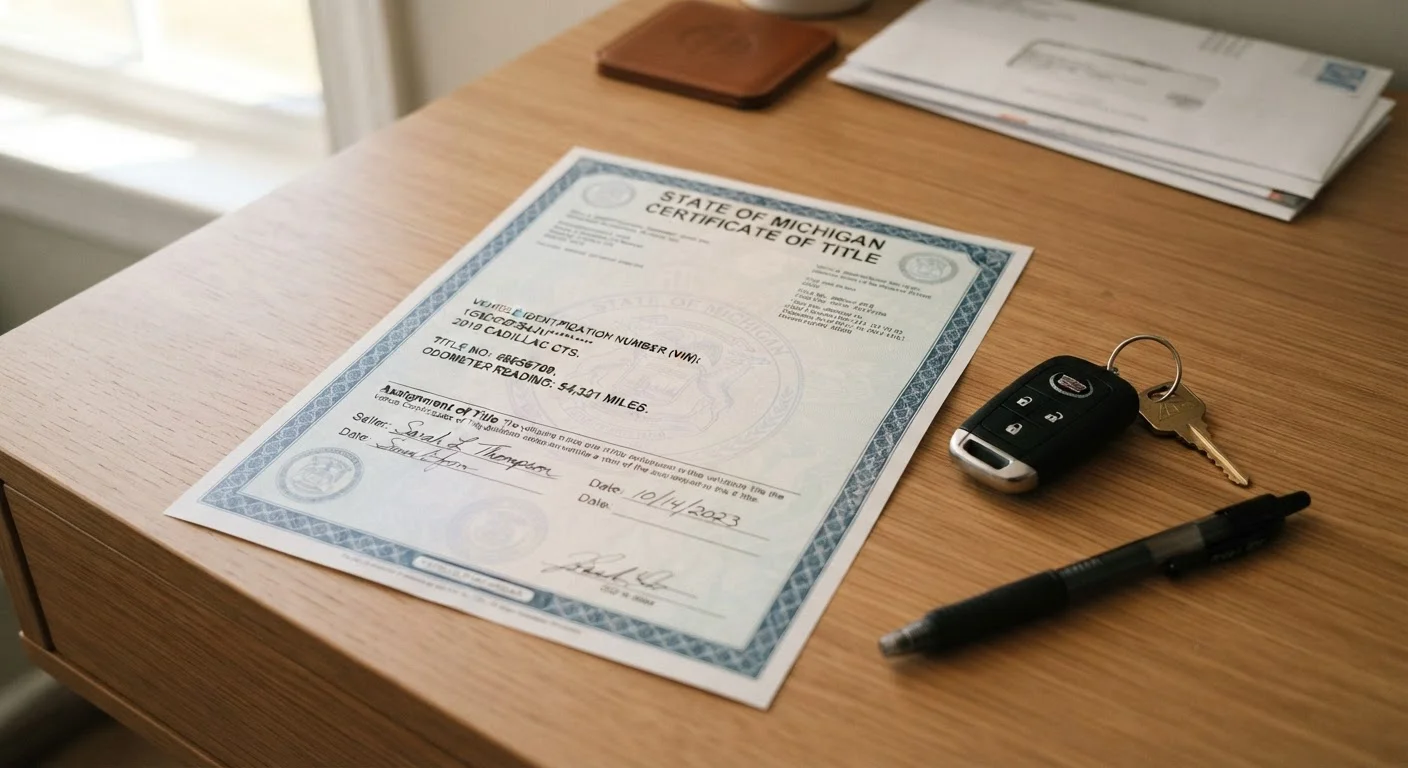
Before anything else, inspect the physical title document. Confirm the seller's name matches their ID, the VIN on the title matches the vehicle, and there are no signs of alteration. Check for any lienholder listed - if a lender's name appears, that lien must be resolved before the transfer can proceed.
Complete the seller's section of the title
The seller must sign the title in the designated area, print their name, enter the odometer reading at the time of sale, and fill in the sale date and agreed purchase price where required. Every field must be completed accurately - errors or incomplete sections can make the title invalid and force a replacement process.
Have the signature notarized if required
Check your state's requirements. If notarization is mandated, both parties should be present with valid ID at a notary public. Many banks, credit unions, shipping stores, and DMV offices offer notary services, often at low or no cost to account holders.
Complete a bill of sale
Even when not legally required, a bill of sale serves as a paper record for both parties. It should include the vehicle description (year, make, model, VIN), sale price, date of sale, and signatures of both buyer and seller. Keep a copy for your records.
Submit the title transfer to the DMV
The buyer takes the signed title, any required state forms, proof of insurance, valid ID, and payment for fees to the DMV to complete the transfer and register the vehicle in their name. Some states allow online or mail-in transfers; others require an in-person visit. Complete this within your state's required timeframe to avoid penalties.
Never Sign a Blank Title
A seller should never sign a title and leave other fields blank for the buyer to fill in later. This is sometimes called a 'title in transit' or 'open title' arrangement, and it can create legal and liability complications for the seller. Some states also prohibit this practice outright. Complete all required fields at the time of the transaction.
How State Requirements Vary
No two states handle title transfers in exactly the same way. Common differences include:
- Deadlines: Some states give buyers as few as 10 days to complete the transfer; others allow 30 to 90 days. Missing the window can result in penalty fees.
- Fees: Title transfer fees vary from under $15 in some states to over $100 in others. Sales tax on the vehicle's purchase price is typically collected at this stage as well.
- Notarization: A handful of states require the seller's signature to be notarized. Check your state DMV's specific requirements before the handoff.
- Odometer disclosure: Federal law requires written odometer disclosure on transfers of most vehicles under 10 years old. Many states include this on the title itself; others use a separate form.
- Bill of Sale: Some states mandate a completed bill of sale in addition to the signed title, while others treat it as optional but recommended.
Always verify current requirements directly with your state's Department of Motor Vehicles (DMV) or equivalent agency before completing any transaction. Requirements can and do change, and no third-party source - including this article - should substitute for official guidance.
It's worth noting that title transfer costs are one of several expenses that can catch new owners off guard. Our article on car ownership costs that catch new owners off guard covers what else to budget for beyond the purchase price.
When There Is a Lien on the Title
If the seller financed the vehicle, the lender is likely listed as a lienholder on the title. In this situation, the seller does not hold a clear title and cannot legally transfer ownership until the lien is satisfied. There are a few ways this typically gets resolved:
- The seller pays off the loan before the sale and obtains a lien release from the lender.
- The proceeds of the sale are used to pay off the remaining loan balance at the time of closing, with the lender releasing the lien directly.
- The transaction is coordinated through a third-party escrow service to protect both parties during payoff.
Buyers should never accept a vehicle with an active lien they did not agree to assume. Confirm the title is clear - or that a lien payoff plan is securely in place - before handing over payment. If you're comparing loan payoff scenarios or weighing whether financing plays into your purchase, our overview of financing a car vs. paying cash may be useful context.