

Key Takeaways
Vehicle Title vs. Registration
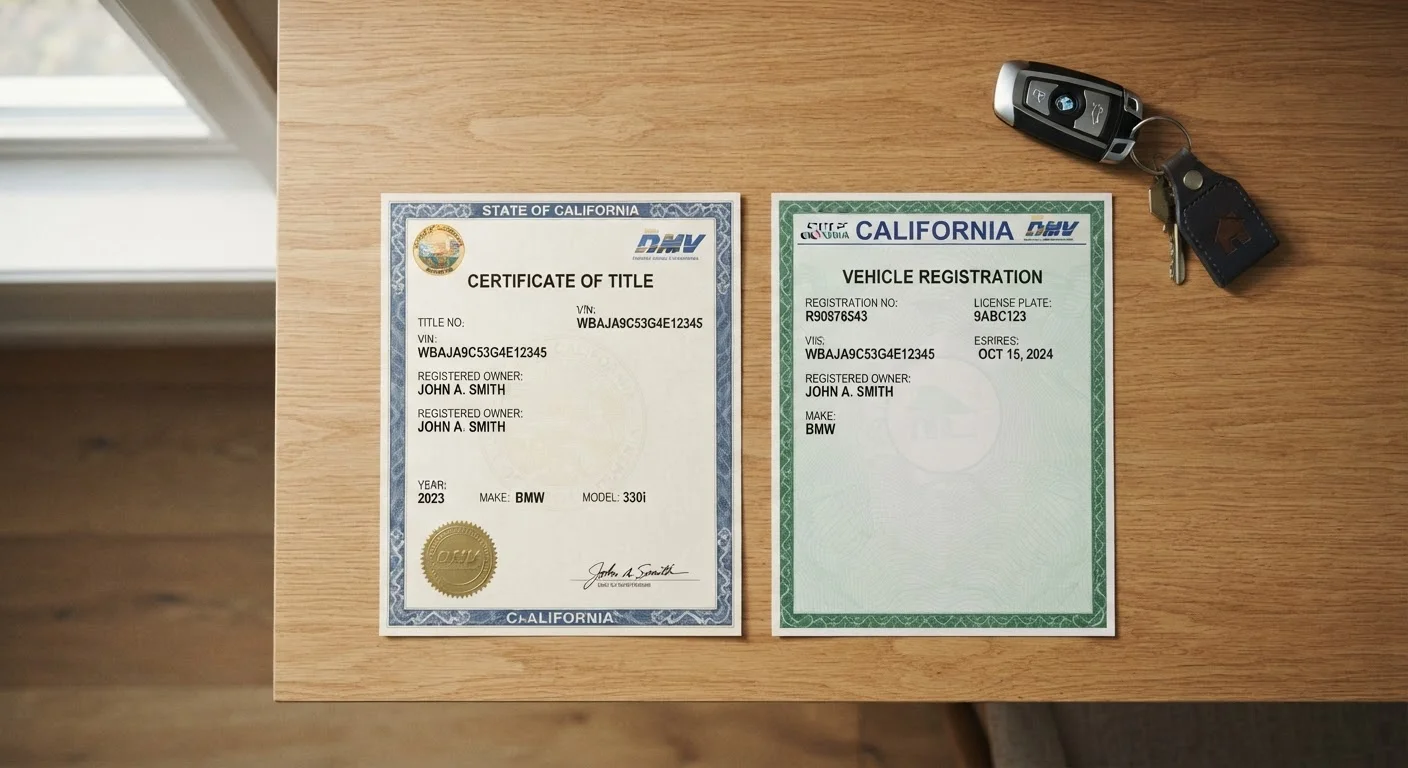
A vehicle title is a legal document that establishes who owns a car. A vehicle registration is a separate document - issued by your state - that grants permission to operate that car on public roads. The two documents serve distinct legal purposes, and a driver can have one without the other depending on their situation.
In states where a lender finances a vehicle purchase, the lienholder is typically listed on the title and may hold the physical document until the loan is paid in full.
What the Title Actually Proves
The vehicle title - sometimes called the certificate of title - is the foundational legal document of car ownership. It records the legal owner's name, the vehicle's make, model, year, and VIN, and any lienholder (typically a lender) attached to the vehicle.
Think of the title the way you'd think of a property deed. It doesn't prove you drove the car or paid insurance on it - it proves the car is legally yours. That distinction matters in several situations:
- Selling the vehicle: You cannot legally transfer ownership without signing over a valid title.
- Resolving disputes: If ownership is ever questioned, the title is the definitive record.
- Financing: Lenders use the title to secure their interest in the vehicle as collateral.
When you pay off a car loan, the lender releases its lien, and you receive a clean title - sometimes called a "clear" or "free and clear" title - showing no outstanding claims. Until that point, the lender typically holds the physical document or is listed as lienholder on a title held by the state.
Transferring a car title is a process with state-specific steps, and getting it right protects both buyers and sellers in private transactions.
50
State DMVs with unique title and registration rules
Vehicle title and registration requirements are set at the state level, meaning procedures, fees, and timelines differ across all 50 states and the District of Columbia.
30-90 days
Typical window to re-register after moving states
Most states require new residents to obtain a new title and registration within 30 to 90 days of establishing residency, though exact deadlines vary.
What Registration Does - and Why It Expires
Where the title is about ownership, the vehicle registration is about permission. It's your state's authorization to operate that specific vehicle on public roads during a set period. Registration is tied to a calendar year or renewal cycle - not to ownership tenure.
Your registration documents typically include:
- The vehicle's make, model, and VIN
- The registered owner's name and address
- The expiration date and a license plate number
Registration fees fund state and local programs - road maintenance, transportation infrastructure, and in some states, emissions testing programs. The cost varies by state and is often calculated based on the vehicle's value, weight, or age. These are among the car ownership costs that catch new owners off guard when they buy their first vehicle.
Driving with expired registration is a traffic violation in every state, regardless of whether you hold a clear title. Law enforcement can verify registration status through your plate number, so keeping it current matters in practical, day-to-day terms.
How the Two Documents Work Together
The title and registration are linked by the VIN - the 17-character identifier unique to every vehicle. When you register a car, the state cross-references the VIN against title records to confirm ownership status. That connection is why you generally cannot register a vehicle in your name without establishing legal ownership through the title process first.
Here's a common scenario that illustrates the relationship: You buy a used car from a private seller. The seller signs over the title to you. You then take that signed title to your DMV, apply for a new title in your name, and simultaneously register the vehicle. From that point, both documents reflect you as owner and registrant.
If you move to a new state, you'll typically need to re-title and re-register the vehicle in your new state within a set window - often 30 to 90 days. The old state's title and registration don't carry over automatically.
Keeping both documents accessible and current is part of responsible vehicle ownership. Our guide to documents every car owner should keep covers where to store these records so they're available when you need them most.
Title Designations Worth Knowing
Not all titles are the same. State DMVs apply designations to titles that reflect a vehicle's history. Understanding these markings helps you make informed decisions - especially when buying used.
- Clean title
- No significant damage history or legal encumbrances. Generally the most straightforward ownership status.
- Salvage title
- Issued when an insurer has declared the vehicle a total loss. The car may have been repaired but carries this designation permanently in most states.
- Rebuilt or reconstructed title
- Issued after a salvage vehicle has been repaired and passed a state inspection. Coverage options from insurers may be limited.
- Lemon law buyback
- Indicates the manufacturer repurchased the vehicle under a state lemon law due to unresolved defects.
A pre-purchase inspection by a qualified mechanic is especially valuable when a vehicle carries any non-clean title designation, since the inspection can reveal repair quality and remaining concerns that the title alone won't describe.
This article provides general informational guidance about vehicle documentation and is not legal or financial advice. Requirements vary by state - consult your state's DMV or a qualified professional for guidance specific to your situation.