

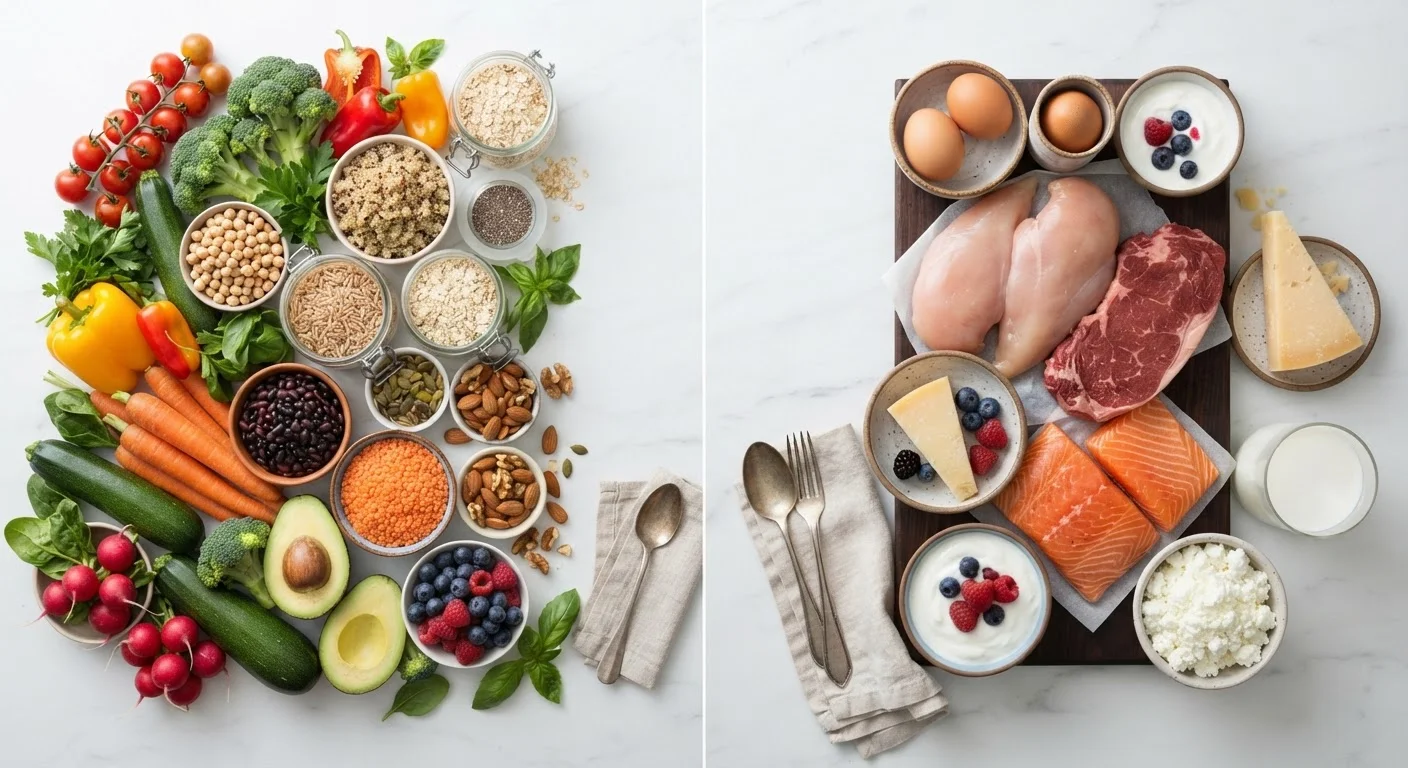
Key Takeaways
Our Verdict
Research consistently shows that both plant-based and omnivorous diets can sustain good health, but diet quality within each pattern matters far more than the label itself. Plant-based diets show particular strength in cardiovascular and metabolic markers when well-planned, while omnivorous diets offer nutritional completeness with less supplementation required. Individual needs, health status, and food access should guide personal choices.
| Best for | Recommended |
|---|---|
| Those prioritizing cardiovascular and metabolic health markers | Plant-based eating pattern |
| Those seeking nutritional completeness with minimal supplementation | Omnivorous eating pattern |
| Those with higher iron, B12, or protein needs (e.g., athletes, older adults, pregnant individuals) | Omnivorous or carefully planned plant-based with professional guidance |
| Those focused on reducing environmental dietary footprint | Plant-based eating pattern |
What the Research Actually Compares
Nutrition science has studied plant-based and omnivorous diets extensively, but interpreting those findings requires care. Most large studies rely on observational data - tracking what people report eating and correlating it with health outcomes - which can identify associations but cannot definitively prove cause and effect. Still, patterns across decades of research offer meaningful guidance.
"Plant-based" is an umbrella term. It includes fully vegan diets (no animal products), vegetarian diets (which may include eggs and dairy), and flexitarian approaches (predominantly plant foods with occasional animal products). Omnivorous diets also vary enormously - a diet of mostly vegetables, whole grains, and lean proteins looks very different from one heavy in processed meats and refined carbohydrates. For more on how food processing shapes nutritional value, see our breakdown of whole vs. processed foods.
The most informative research compares high-quality versions of each pattern rather than the best of one against the worst of another.
Health Outcomes: Where Each Pattern Has Strengths
Large cohort studies and systematic reviews consistently link well-constructed plant-based diets to lower rates of cardiovascular disease, type 2 diabetes, hypertension, and certain cancers - particularly colorectal cancer. The EPIC-Oxford study and the Adventist Health Studies are among the most cited long-term data sources, consistently showing that vegetarians and vegans tend to have lower body mass index and improved cardiometabolic markers on average compared to omnivores in the same populations.
Omnivorous diets, however, are not inherently associated with worse outcomes. Populations following traditional Mediterranean, Nordic, or Japanese eating patterns - all of which include animal foods - demonstrate excellent longevity and low chronic disease rates. Global dietary patterns research underscores that these diets share an emphasis on whole, minimally processed foods rather than the presence or absence of meat per se.
The clearest negative signals in omnivorous eating come specifically from high consumption of processed meats (e.g., bacon, sausage, deli meats) and red meat in large quantities, which the World Health Organization classifies as probable or known carcinogens for colorectal cancer risk. Moderate consumption of unprocessed red meat shows weaker and more mixed associations in the literature.
| Plant-Based Diet | Omnivorous Diet | |
|---|---|---|
| Cardiovascular risk markers | Generally lower LDL cholesterol; strong evidence | Varies widely with diet quality |
| Vitamin B12 status | Risk of deficiency; supplementation needed | Typically adequate from animal foods |
| Dietary fiber intake | Typically high; supports gut health | Often below recommended levels |
| Iron and zinc absorption | Lower bioavailability from plant sources | Higher bioavailability from heme sources |
| Saturated fat exposure | Generally lower | Can be high depending on food choices |
| Meal planning complexity | More planning needed for nutrient completeness | Nutritional completeness easier to achieve |
| Environmental footprint | Generally lower greenhouse gas emissions | Higher on average, varies by food choices |
Key Nutrients to Watch on Each Approach
Nutritional adequacy is where the two approaches diverge most clearly in practical terms.
Plant-based diets: nutrients that require attention
- Vitamin B12: Found almost exclusively in animal products. Deficiency is a well-documented risk for vegans and can cause irreversible neurological damage if untreated. Supplementation or fortified foods are generally recommended.
- Iron: Plant foods contain non-heme iron, which is absorbed less efficiently than heme iron from meat. Pairing iron-rich plant foods with vitamin C can improve absorption.
- Calcium and vitamin D: Dairy-free eaters need reliable alternative sources (fortified plant milks, tofu set with calcium, leafy greens) and may need to consider vitamin D supplementation depending on sun exposure and geography.
- Zinc: Absorption is lower from plant sources due to phytate content. Soaking and fermenting legumes can improve bioavailability.
- Long-chain omega-3s (EPA and DHA): Found primarily in fatty fish. Algae-based supplements can provide these for plant-based eaters.
Omnivorous diets: nutrients worth monitoring
- Fiber: Many omnivores in the U.S. fall short of the recommended daily intake, which has implications for gut health, blood sugar, and cardiovascular risk.
- Saturated fat: Diets heavy in full-fat dairy, fatty meats, and processed foods can push saturated fat intake above established guidance.
- Sodium: Processed and cured meats are significant contributors to high sodium intake.
Building a varied, balanced plate helps on both approaches. Practical plate-building guidance can help readers structure meals without counting every gram.
Practical Considerations Beyond the Plate
Cost, accessibility, and personal circumstances all shape which approach is realistic for any individual. Plant-based staples like dried legumes, whole grains, and seasonal vegetables can be highly affordable, though specialty products marketed to plant-based eaters (meat alternatives, specialty milks) tend to carry premium prices. Evidence-backed budget eating strategies apply across both dietary patterns.
Life stage and health status matter significantly. Pregnant individuals, growing children, older adults with higher protein needs, and people managing chronic conditions may have requirements that make one approach more practical with professional guidance. Blanket generalizations don't serve these groups well.
Finally, sustainability and environmental impact are increasingly part of this conversation. On a population level, shifting toward more plant-forward eating is generally associated with lower greenhouse gas emissions and land use. However, this is a systems-level consideration and should not be framed as a moral obligation imposed on individuals navigating their own health and food access realities.
This article provides general nutrition information and education. It is not a substitute for personalized medical or dietary advice. Consult a registered dietitian or qualified healthcare provider before making significant changes to your diet, particularly if you have an existing health condition.