

Key Takeaways
Drywall Cracks
Drywall cracks are separations or fractures in the gypsum panel surface that covers most modern interior walls and ceilings. They range from superficial hairline marks caused by normal settling to wider gaps that signal structural or moisture problems. Understanding what type of crack you're looking at is the first step toward knowing how serious it is.
Drywall panels are typically fastened to wood or metal studs and covered with joint compound (mud) at seams. Cracks often originate at seams, corners, or fastener points - areas of inherent weakness.
Why Cracks Appear in the First Place
Drywall is a relatively rigid material attached to a house that is constantly in motion. Wood framing expands and contracts with humidity and temperature. Foundations settle gradually over years. Even everyday foot traffic and door slamming create small vibrations. All of this movement eventually shows up on your walls.
The most common culprits behind ordinary cracks include:
- Seasonal wood movement - Framing lumber absorbs and releases moisture throughout the year, shifting slightly with each cycle.
- Settling - Most homes settle measurably in the first few years after construction, and older homes continue settling gradually.
- Poor initial taping - If joint tape wasn't properly embedded during original installation, seams are more prone to cracking later.
- Fastener pops - Nails or screws backing out of studs create small raised bumps or short cracks around the fastener point.
- Moisture intrusion - Water from leaks, condensation, or flooding weakens and warps drywall, causing cracks and soft spots.
Knowing why a crack appeared is just as important as knowing how to fix it. A patch that doesn't address the root cause will crack again - sometimes within months. See our guide on the costs of deferred maintenance for why diagnosing the cause first always pays off.
Reading the Crack: Size, Shape, and Location
Not all cracks communicate the same thing. Learning to read the visual clues - size, orientation, and position on the wall - helps you make a confident call about urgency.
Document Before You Patch
Before repairing any crack you're uncertain about, photograph it next to a ruler or coin for scale and note the date. Check back in four to six weeks. A crack that hasn't grown is far less worrying than one that has widened noticeably - and your photos give a contractor useful information if you do need professional help.
Hairline Cracks
Thin as a strand of hair and typically found along seams or at ceiling-wall joints. Almost always cosmetic. These respond well to a light skim of joint compound once sanded smooth.
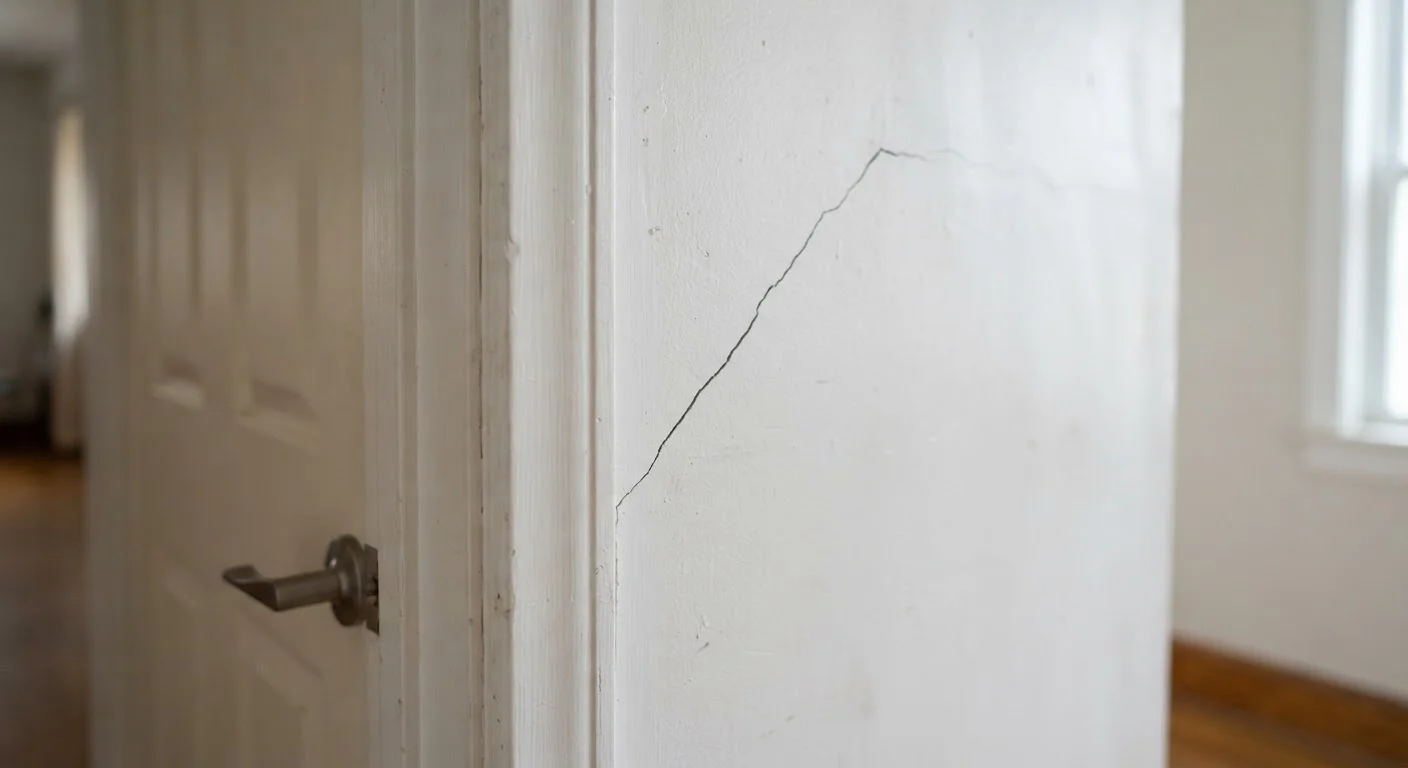
Diagonal Cracks from Corners
Cracks that shoot diagonally from the corners of windows or door frames are one of the most common patterns homeowners encounter. A single crack of this type that has been stable for years is usually the result of past settling. However, if the crack is new, growing, or one of several appearing at once, it warrants closer inspection of the framing or foundation.
Horizontal Cracks
On exterior walls - especially in basements - horizontal cracks can signal lateral soil pressure and are among the more serious types. These should be evaluated by a licensed professional promptly.
Stair-Step Cracks
Cracks that follow the seams of drywall panels in a stair-step pattern along a wall can indicate differential settlement. They're worth monitoring for growth over time.
Cracks with Displacement
If one side of a crack is raised above the other - meaning the wall surface is no longer flush - this displacement is a red flag. It suggests more significant movement and should be assessed by a qualified contractor. Our related article on when to hire a professional versus DIY can help you decide on next steps.
Moisture Cracks: The Category That Can't Be Ignored
Water-related cracks deserve special treatment because patching the drywall without stopping the moisture source is a guaranteed temporary fix. Look for these accompanying signs when assessing a crack:
- Yellowish or brownish staining around or along the crack
- Soft, spongy, or crumbling drywall when pressed gently
- Musty smell in the area
- Mold or mildew growth along the crack or on surrounding paint
If you notice any of these signs, stop before reaching for joint compound. Investigate where the water is coming from - a roof leak, a plumbing line above the ceiling, an HVAC condensation drip, or exterior water infiltration are common sources. Damaged drywall from sustained moisture often needs to be cut out and replaced entirely rather than patched.
When mold is visible, consult a qualified remediation professional before disturbing the affected area. Disturbing mold without proper precautions can spread spores throughout your home.
When to Patch It Yourself - and When to Stop
Most hairline cracks, seam separations, and small fastener pops are well within the range of a capable DIY repair. The basic process involves cleaning the area, applying mesh tape if needed, feathering on joint compound in thin layers, sanding smooth, and priming before painting. See our step-by-step drywall patching guide for detailed technique.
Stop and consult a licensed contractor or structural engineer if you observe:
- Cracks wider than approximately one-quarter inch
- Any crack with visible displacement between the two sides
- New cracks appearing rapidly or in multiple locations at once
- Cracks combined with doors or windows that suddenly stick or won't close
- Horizontal cracks on basement or lower exterior walls
- Cracks alongside sloping or bouncy floors
These patterns, taken together, can indicate foundation movement, framing failure, or other issues that go well beyond drywall. A patch won't solve what's underneath. For context on how common misconceptions lead homeowners astray on repairs like these, check out our article on DIY home repair myths that cost homeowners money.
~90%
Drywall cracks that are cosmetic in nature
According to general contractor and home inspection estimates, the overwhelming majority of residential drywall cracks are cosmetic and not structurally significant.
1/4 inch
Crack width that warrants professional evaluation
Home inspection standards commonly flag cracks at or wider than one-quarter inch as a threshold for further structural review.
3-5 years
Typical settling period for new construction
Most new homes experience their most active settling during the first few years, making post-construction drywall cracks especially common during this window.