

Key Takeaways
Why the Kitchen Is the Hardest Room to Keep Organized
The kitchen is the most-used room in most American homes - a place for cooking, eating, homework, mail sorting, and conversation. That multi-purpose reality is precisely why clutter accumulates so stubbornly there. The problem usually isn't a lack of effort; it's a mismatch between how the kitchen is set up and how it actually gets used day to day.
Understanding the specific missteps driving that mismatch is the first step toward a kitchen that stays orderly without constant intervention. For a broader look at tackling every room in the house, see our complete home organization walkthrough.
Clutter Is a System Problem, Not a Willpower Problem
If your kitchen keeps reverting to chaos after you tidy it, the issue is almost certainly your organization system - not your habits or effort. No amount of cleaning fixes a setup that doesn't match how you actually use your kitchen. Redesigning the system is what creates lasting change.
The Most Common Kitchen Organization Mistakes
Most kitchen clutter problems trace back to a handful of repeating errors. Recognizing them in your own space makes it much easier to address the root cause rather than tidying the same surfaces week after week.
Storing items based on category rather than frequency of use.
Why it happens: Most people group similar things together - all pots in one cabinet, all baking supplies in another - which feels logical but ignores how often each item is actually reached for.
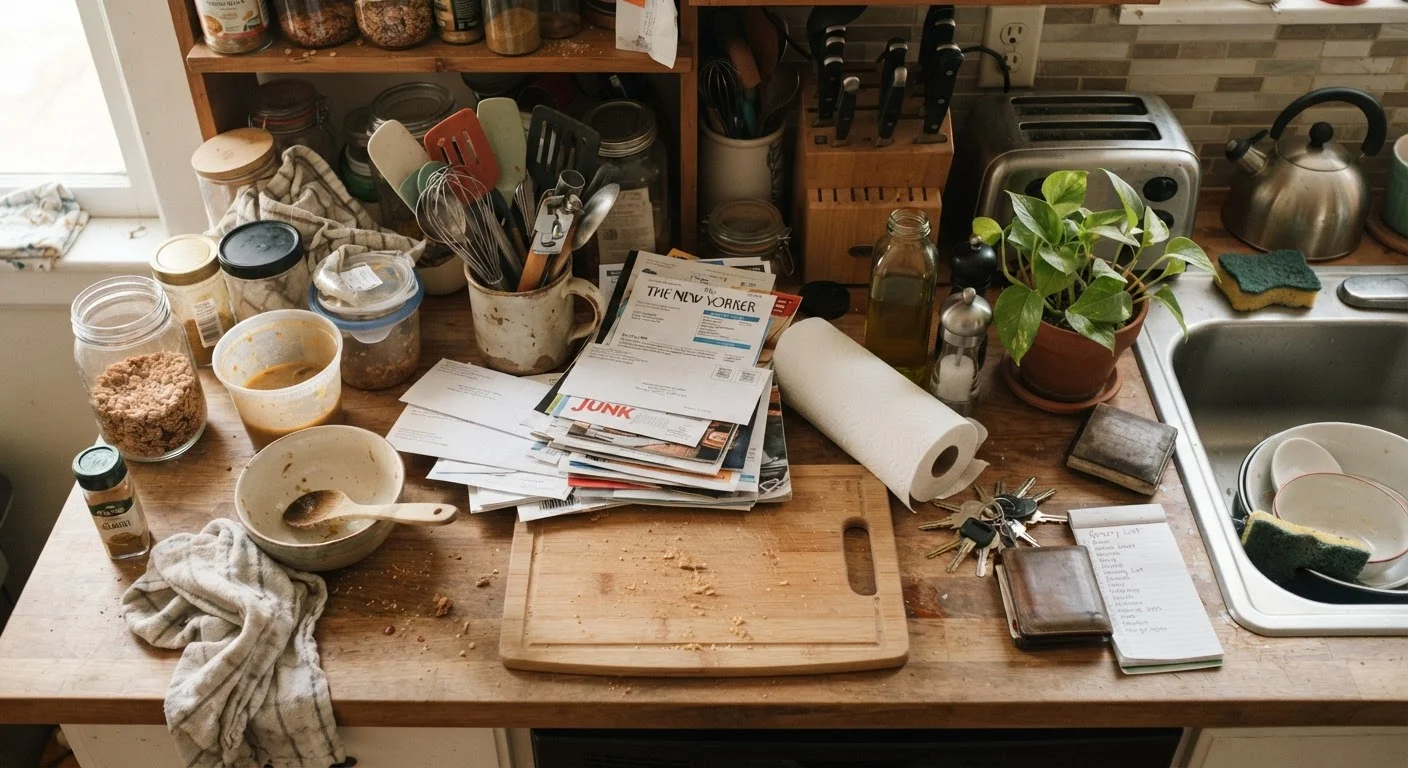
Treating the countertop as a storage zone rather than a work surface.
Why it happens: Counters are flat and accessible, making them the path of least resistance for landing appliances, mail, keys, and anything else without a clear home.
Keeping duplicate or broken tools "just in case."
Why it happens: People hold onto worn spatulas, mismatched lids, and duplicate gadgets out of habit or mild guilt about waste. Over time, drawers and cabinets fill beyond usable capacity.
Using mismatched or oversized containers in the pantry.
Why it happens: Bags, boxes, and containers of varying shapes and heights stack awkwardly, waste vertical space, and create visual chaos that reads as clutter even when shelves are reasonably organized.
Having no defined landing zone for non-kitchen items.
Why it happens: Kitchens are central hubs, so mail, school papers, keys, and chargers naturally migrate there. Without a dedicated spot, these items scatter across every surface.
If some of these patterns feel deeply familiar, you're not alone - and the solutions are more straightforward than most people expect. It also helps to examine whether popular storage advice is actually working for you; organization myths that make clutter worse covers several widely repeated tips that can backfire in real kitchens.
Building a System That Actually Holds
The goal isn't a perfectly staged kitchen - it's a kitchen where putting things away is easier than leaving them out. That shift happens when every item has a logical, accessible home and the volume of stuff matches the available space.
Buying Storage Before Decluttering Backfires
A common trap is purchasing bins, racks, and organizers before reducing what you own. New containers simply give excess items a more orderly home - they don't solve the root problem. As explained in Decluttering Before Organizing, sequence is everything: pare down first, then contain what remains.
Once you've reduced and reorganized, the habits that maintain order become far less effortful. The same principle applies throughout the house: if you're curious how organization holds up over time in other spaces, the strategies in keeping a closet organized after sorting it translate well to kitchen maintenance. And if you're weighing whether a more minimal approach or a traditional storage-heavy system fits your household best, minimalist organizing vs. traditional storage solutions walks through the trade-offs clearly.
Start with one drawer or one cabinet section. A single well-organized zone builds momentum and makes the rest of the process feel manageable rather than overwhelming.